Reducing Gender Discrimination and Enhancing Productivity: Evidence from a Firm-Level Gender Sensitivity Intervention in Bangladesh
May 2024
Project Background:
Women in Bangladesh still face many barriers to achieving good jobs and career growth. Deep-rooted gender norms often lead to biased hiring, unsafe workplaces, harassment, and limited opportunities for promotion. These challenges not only affect women’s confidence and economic independence but also reduce the productivity of the companies they work in.
However, there is good news: gender norms can change. Research shows that with the right training, dialogue, and information, attitudes and behaviors in the workplace can improve.
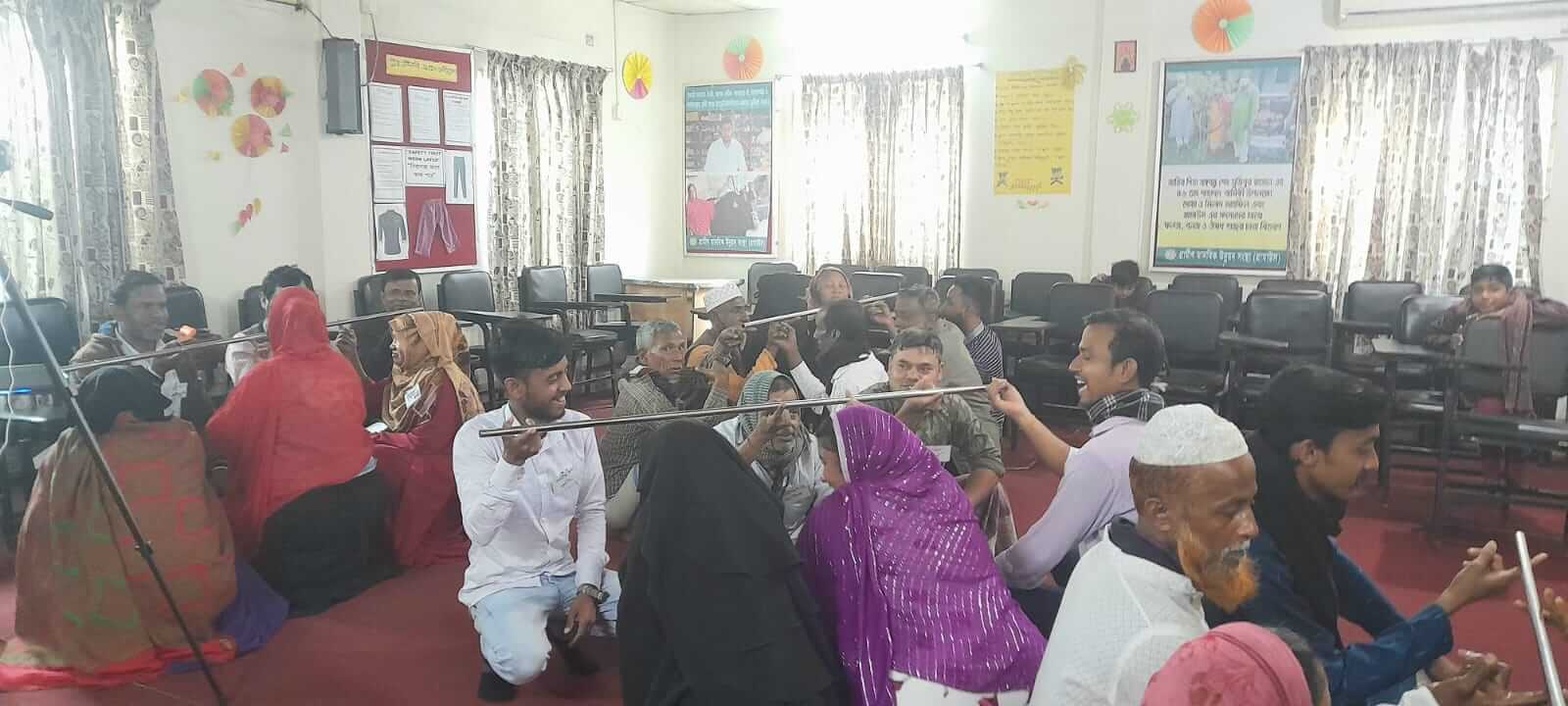
This project evaluates whether a practical and intensive gender sensitivity training program, delivered directly within small and medium-sized manufacturing factories, can generate positive change. Specifically, it aims to reduce gender discrimination and workplace harassment, improve attitudes and teamwork, and increase overall productivity.
The study is being carried out in partnership with BRAC and the BRAC Institute of Governance and Development (BIGD). Using a rigorous research approach, we are working closely with around 2,000 factories across Bangladesh to find simple, effective, and scalable solutions for building more inclusive and productive workplaces.
Project Scope & Reach:
This project is being implemented across small and medium-sized manufacturing firms in Bangladesh. We are working in both urban and semi-urban areas spread over multiple districts.
Type of firms: Mixed-gender manufacturing enterprises (factories)
Firm size: 5 to 20 employees each
Total reach: Approximately 2,000 firms
Participants: Around 6,000 employees and 2,000 managers will take part in surveys and lab-in-the-field experiments
Key research partners:
BRAC Institute of Governance and Development (BIGD), BRAC University; BRAC Skills Development Programme; University of Vermont; KDI School of Public Policy and Management; CDES, Monash University (Lead).
Funding & Support:
This project is funded by the PEDL programme and other international donors supporting firms, labour markets, and gender equality. The funding covers large-scale fieldwork, data collection, and dissemination of findings.
Roles of GDRI:
Capacity Development & Design: Adapting gender training to local industrial contexts and cultural norms; supporting instrument design for firm/worker surveys and experimental tasks.
Field Implementation & Engagement: Coordinating with local firms/associations for recruitment and participation; supervising field teams, quality control, ethical oversight.
Data Management & Analysis: Developing secure data protocols and anonymization; contributing to analysis, report preparation, policy briefs, academic outputs; leading/co-hosting dissemination events with stakeholders, SMEs, civil society.
Project Details
-
Project Type
Ongoing Projects
-
Start
May 2024
-
Focus Themes
Gender Equality