
Loading...
Loading...
May 2013 — Mar 2018
Project Background:
Women in low‑ and middle‑income countries often have limited financial literacy, which restricts their access to economic opportunities and weakens their bargaining power within the household. In rural Bangladesh, less than 40 percent of adults passed a basic financial literacy assessment in 2016, and there is a clear gender gap in financial knowledge and access to formal financial services. For example, around 65 percent of men but only 36 percent of women in rural areas had bank accounts in 2017, and informal savings and loans remain the main sources of financial support.
This project tests whether low‑cost financial diaries can serve as an effective alternative or complement to traditional financial education courses to improve women’s financial literacy, money management behaviour, and financial empowerment in rural Bangladesh. It also examines whether these interventions help women build resilience to economic shocks, including the Covid‑19 pandemic.
Project areas
Rural areas in Khulna and Satkhira districts, southwestern Bangladesh.
150 villages randomly assigned to three groups: financial diaries, financial education, and comparison.
Sample: 2,364 married women aged 18–40, all literate and able to perform basic calculations.
Project Authority:
Researchers: Asad Islam, Vy Nguyen, Russell Smyth, Zabid Iqbal.
Partner organizations: Khulna University, International Growth Centre (IGC), Monash University.
Fieldwork partners: Global Development & Research Initiative (GDRI) and Bangladesh Institute of Development Studies (BIDS).
Donors:
· International Growth Centre (IGC).
Roles of GDRI:
Capacity Development and Intervention Design:
Collaborated with Khulna University and BIDS to adapt financial diary tools and training materials to the rural Bangladeshi context.
Helped develop simple diary formats with separate inflow and outflow columns and user‑friendly instructions for women with basic numeracy.
Contributed to the design and localisation of the six‑module financial education curriculum (budgeting, savings, debt, financial services, emergencies, old‑age saving).
Field Implementation and Community Engagement:
· Supported listing and recruitment of 2,364 eligible married women across 150 villages in Khulna and Satkhira.
· Deployed field workers to distribute financial diaries, train women in their use, and revisit households every two weeks over 30 weeks to collect and cross‑check entries and answer questions.
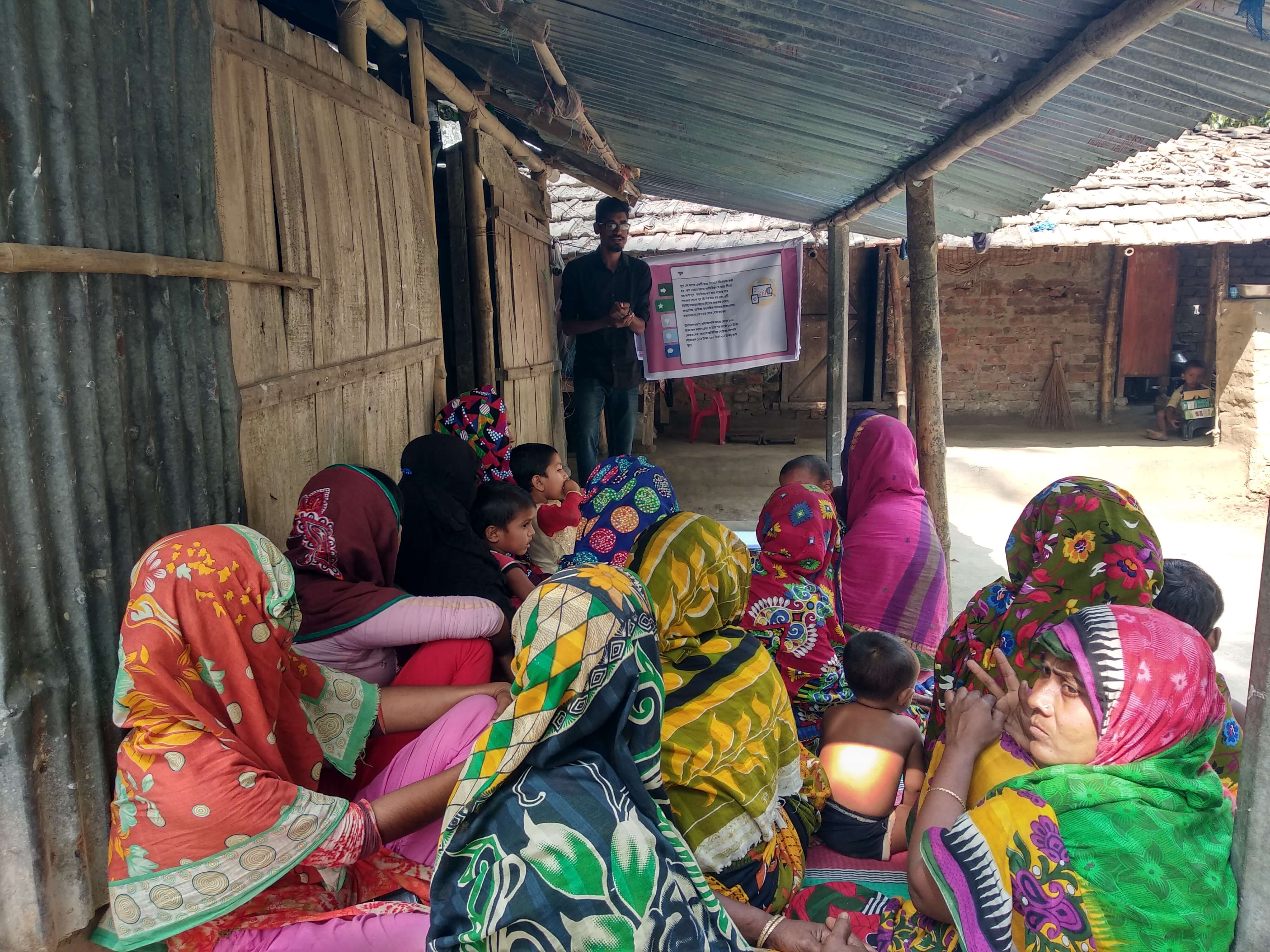
· Helped organise and deliver weekly five‑hour financial education sessions over six weeks, including group discussions, graphical aids, and field exercises.
· Assisted in implementing experimental games with a sub‑sample of 570 women to measure intra‑ and extra‑household financial decision‑making and empowerment.
Data Management, Cleaning, and Analysis:
Managed field monitoring of diary completeness, session attendance, and respondent engagement to ensure high take up and adherence in both interventions.
Supported baseline and endline survey implementation, as well as a follow up survey one year after the interventions (eight months into Covid 19) to assess long term effects and crisis coping.
Worked with the research team to maintain high quality, anonymised datasets for analysis of financial literacy, savings, debt, empowerment, and Covid 19 resilience outcomes.
Project Type
Completed Projects
Duration
May 2013 — Mar 2018
Focus Themes
Addressing Learning Loss Using Low Tech Remote Learning among Underprivileged High School Students: The Bangladesh Case
Ongoing Projects
Mar 2023
Income Loss and Wellbeing during COVID-19 Lockdown in Rural Bangladesh: Evidence from Large Household Surveys
Completed Projects
Apr 2023
Telementoring and Homeschooling during school closures: A randomized Experiment in Rural Bangladesh
Completed Projects
Mar 2021