
Loading...
Loading...
Mar 2021 — Feb 2023
Project Background
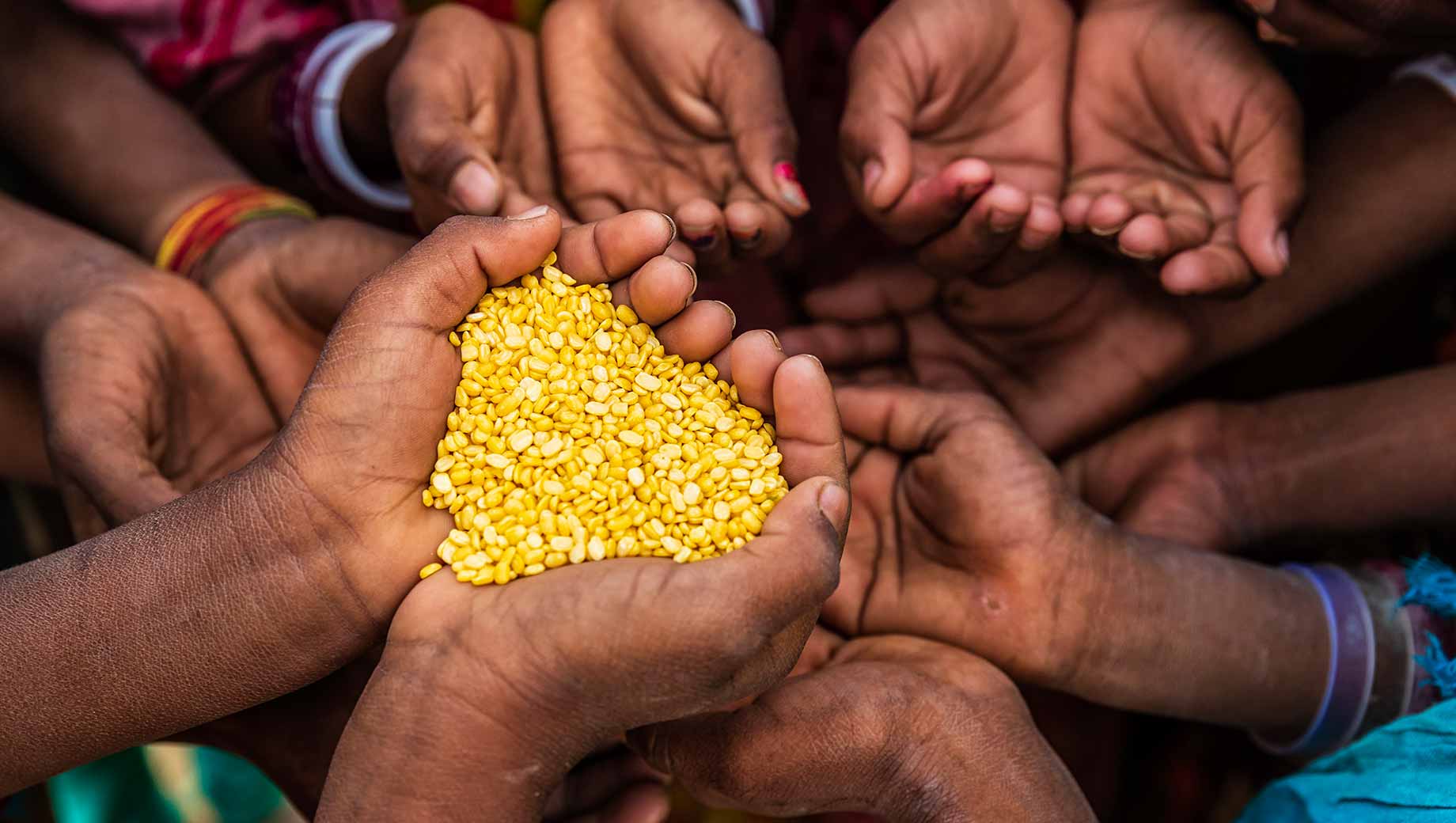
Bangladesh entered a nationwide COVID‑19 lockdown on 26 March 2020, at a time when about 51 million people (31.5% of the population) were already moderately or severely food insecure and the country ranked 83rd out of 113 in the Global Food Security Index. Lockdown and movement restrictions immediately disrupted jobs, businesses and market access, with an estimated 13 million people out of work and a further 16.4 million (12.7 million in rural areas) at risk of falling into extreme poverty. These shocks created serious concerns that food insecurity, undernutrition, and related physical and mental health problems would deepen, particularly among rural households reliant on casual labour and informal work.
This project provides rapid evidence on how the COVID‑19 crisis affected rural food security in southwestern Bangladesh, who became food insecure, how the situation changed over a few weeks, and what coping strategies households used in the absence of strong social safety nets. Using two rounds of large‑scale telephone surveys, the study identifies key determinants of food insecurity, documents its short‑term dynamics, and highlights implications for emergency response and social protection policy.
Project Areas
Rural households in the southwestern region of Bangladesh (Khulna and Satkhira districts), building on three large‑scale RCT samples from 2019.
423 villages covered in Survey 1 and 410 villages in Survey 2.
Sampling frame: 13,450 households listed in GDRI’s directory, of which 12,625 (93.8%) had at least one registered mobile phone number.
Donors
International academic research funding associated with the Food Policy article “Determinants and dynamics of food insecurity during COVID‑19 in rural Bangladesh.”
Ethical approval obtained from Monash University (Ref. No. 24746).file:40]
Project Authority
Lead Academic Institutions:
Monash University (Centre for Development Economics and Sustainability and Department of Economics).file:40]
Khulna University, IIT Kanpur, University of Newcastle, Technical University of Munich (co‑author affiliations).file:40]
Local Research Partner: Global Development & Research Initiative Foundation (GDRI).file:40]
Roles of GDRI
Capacity Development and Survey Design
Supported adaptation of the Food Insecurity Experience Scale (FIES) into a concise, phone‑based module suitable for measuring household‑level food insecurity (mild, moderate, severe, and overall FIES score).file:40]
Contributed to questionnaire design on income loss, occupation, remittances, microcredit participation, coping strategies, and linkage to existing 2019 household data on income, savings, education, land and women’s decision‑making power.
Advised on sampling strategy, call protocols, informed consent scripts, and procedures to track and minimise non‑response in phone surveys.
Field Implementation and Community Engagement
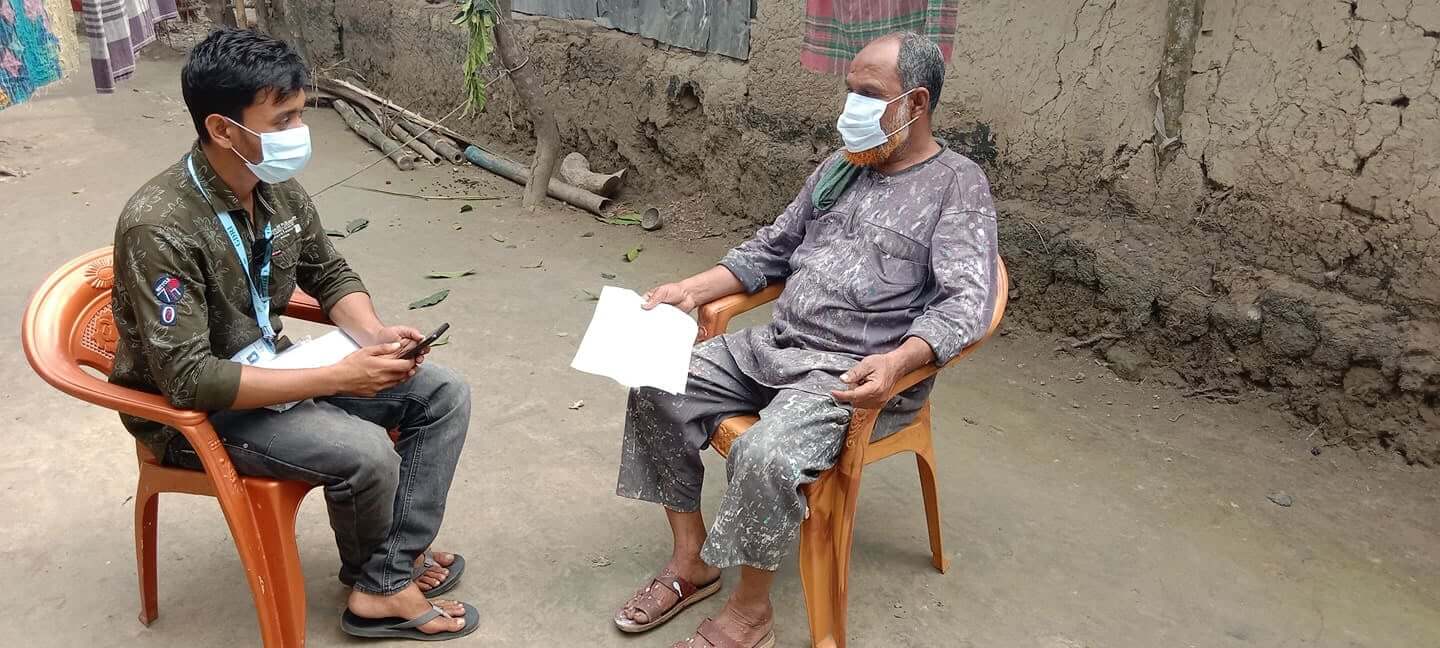
Leveraged its directory and local networks in Khulna and Satkhira to reach 12,625 households with valid phone numbers and successfully completed 9,847 interviews in Survey 1 (78% response rate).file:40]
Implemented Survey 2 on a random subsample of 2,500 Survey‑1 households and completed 2,402 follow‑up interviews (96% response rate), with attrition mainly due to switched‑off or inactive phones and repeated non‑answering.
Recruited and supervised experienced local enumerators who were already known to many households from previous face‑to‑face surveys, helping build trust and reduce refusals during phone interviews.
Used a two‑step calling protocol (initial rapport‑building call and scheduled interview) to improve participation and avoid rushed or incomplete interviews under lockdown conditions.
Data Management, Cleaning, and Analysis Support
Managed call logs, appointments, callbacks and basic data checks to ensure high‑quality phone data comparable to face‑to‑face surveys.
Assisted in matching Survey‑1 and Survey‑2 data to the 2019 baseline for 2,691 households, enabling analysis of how pre‑existing characteristics affected food‑security outcomes during COVID‑19.
Helped implement best‑practice phone‑survey procedures (short interviews, clear response scales, repeated response options), contributing to reliable measurement of food insecurity and related variables.
Project Type
Completed Projects
Duration
Mar 2021 — Feb 2023
Focus Themes
Income Loss and Wellbeing during COVID-19 Lockdown in Rural Bangladesh: Evidence from Large Household Surveys
Completed Projects
Apr 2023
Telementoring and Homeschooling during school closures: A randomized Experiment in Rural Bangladesh
Completed Projects
Mar 2021

Myopic Loss Aversion and Investment Decisions: From the Laboratory to the Field
Completed Projects
Feb 2014